|
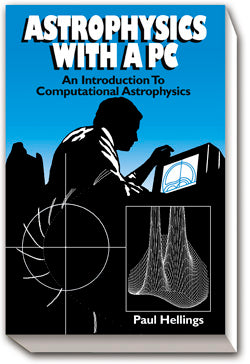
Computer
Modeling: From Sports to Spaceflight... From Order to Chaos
422 Pages, Softbound, 8.5
by 11 inches, 229 Illustrations, Includes CD-ROM, with IBM-PC Software
$34.95.
In stock for
immediate shipment!
Click here for CD-ROM details
Calculus is the science of change and differential equations are the engines of
calculus. A differential equation is like a machine that is capable of movement
and ready for action. It only requires some activation: pressing a button,
inserting a coin, lighting a fuse or running a computer. Then it will
describe and give details of something that is continually changing. A chemical
compound is formed or broken up (gradually, one hopes), a mortgage is repaid, a
population increases, a disease spreads, a miss-hit golf ball curves away from
its intended direction or an orbit is described in space: in each of these
cases the changes will be modeled by differential equations.
Much of the material in this book has been used for over fifteen years in
teaching an interdisciplinary one semester course in computer modeling to
undergraduates, principally in engineering, physics and mathematics. The book
is structure for those who do their own programming, but is also suitable for
individuals using "packages" for solving systems of differential equations. The
subjects covered are exceptionally diverse and include chaotic systems;
population growth and ecology; sickness and health; competition and economics;
sports; travel and recreation; space travel and astronomy; pendulums; springs;
chemical and other reacting systems.
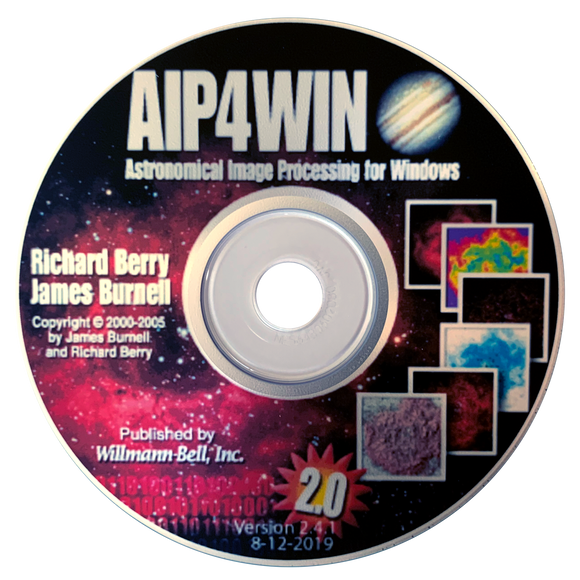
Accompanying each book is software on CD-ROM which includes over 50 projects
from this book denoted in the text by a CD-ROM symbol. The programs are
menu driven with ample help files and make use of graphic and animation
techniques to demonstrate the various phenomena being modeled. The programs are
written to be run on MS-DOS platforms. The minimum hardware configuration is an
IBM compatible 386-level machine with math coprocessor, mouse and VGA color
monitor. The programs require 8.5 Mb of disk space and consist of executable
files. Pascal code is also included for the user's information.
About the author:
J.M.A. Danby was born in 1929, and studied mathematics at Oxford and Manchester
Universities. He has taught in the U.S. since 1957, before which he was for a
time, a professional musician, as first chair oboist in the London Philharmonic
Orchestra. He has taught in the Astronomy Departments of the University of
Minnesota and Yale University. For more that 30 years he has been a member of
the Mathematics Department at North Carolina State University where he was
appointed Alumni Distinguished Professor in recognition of teaching. The minor
planet Danby was named after him in recognition of his contributions to
the study of Celestial Mechanics by the International Astronomical Union. He
authored Fundamentals of Celestial Mechanics and co-authored
Astrophysics Simulations which included software that received an Annual
Educational Software award from Computers in Physics in 1996.
Table of Contents Chapter 1 Getting to Know a
Differential Equation 1.1 What a Differential Equation Might Mean
1.2 What is a Differential Equation Telling Us To Do? 1.3 Looking at and
Interpreting a Solution 1.4 When is there a solution? Or when is there a
solution? Or when is there a solution? 1.5 Assignments Chapter 2
Some Fundamental Concepts in the Solution of Differential Equations
2.1 Euler's Method 2.2 Truncation Error 2.3 The Order of a Method
2.4 Numerical Confirmation of the Order of Euler's Method Chapter
3 One Approach to Solving a System of Ordinary Differential Equations
3.1 Generalities 3.2 A Look at the Improved Euler's Method 3.3
Runge-Kutta Formulas 3.4 Stepsize ControlSome Tactics to Avoid
3.5 Fehlberg's RKF4(5) Method 3.6 The Implementation of RKF4(5). One
Equation 3.7 The Implementation of RKF4(5). A System of Equations 3.8
Projects for Debugging, Testing and Understanding the Program 3.9 Running
the Program Chapter 4 Introduction to Modeling 4.1
Generalities 4.2 A Model for Discussion: Richardson's "Arms Race" 4.3
Linear Systems, Linear Stability and Nonlinear Stability Chapter 5 An
Introduction to Chaotic Systems 5.1 Introduction 5.2 Chaos in
Dynamical Systems 5.3 The Lorenz Equations 5.4 A Periodically Forced
Pendulum 5.5 Chaos in Difference Equations Chapter 6 Population
Growth and Ecology 6.1 The Predator-Prey Model of Volterra 6.2
Volterra's Model with Periodic Birth-rate 6.3 The Predator-Prey Model with
Fishing 6.4 The Predator-Prey Model with Logistic Growth for the Prey
6.5 The Predator-Prey Model with Logistic Growth for Both Species 6.6 An
Alternative Law for Predation 6.7 A Predator-Prey Model Due to R.M.May:
Limit Cycles 6.8 The Predator-Prey Model with Internal Competition
6.9 Cooperation Between Two Species 6.10 Competition Between Two Species
6.11 The Predator-Prey Model with Child Care 6.12 Predator-Prey
Models with More than Two Species 6.13 Carnivores, Vegetarians and Plants
6.14 Violets, Ants and Rodents 6.15 A Model for the Population Growth
of a Parasite 6.16 A Model for Cannibalism 6.17 Population Growth in
a Changing Environment 6.18 A Model for Lake Pollution 6.19 A Model
in Ecology: The Spruce Budworm versus the Balsam Fir Chapter 7 Sickness
and Health 7.1 A Model for the Spread of Disease 7.2 Possible
Effects of Vaccination 7.3 Possible Effects of Migration 7.4 The
Spread of Disease in a Population with Birth and Death Included in the Model: 1
7.5 The Spread of Disease in a Population with Birth and Death Included in
the Model: 2 7.6 Cross-Infection Between Two Species 7.7 The Spread
of Disease with Incubation Included 7.8 Seasonal Changes in Infectiousness
7.9 The Epidemiology of Malaria 7.10 The Spread of Gonorrhea
7.11 A Model for the Initial Spread of the HIV Virus 7.12 A Model for
Weight Change 7.13 Zeeman's Model for the Heartbeat Chapter 8
Competition and Economics 8.1 Lanchester's Combat Models 8.2
Production and Exchange 8.3 The Economics of Fishing: One Species of Fish
8.4 The Economics of Fishing: Two Species of Fish 8.5 Goodwin's
Growth Cycle 8.6 A One-sector, Two-capital Model of Economic Growth
Chapter 9 Sports 9.1 The Dynamics of a Spinning Ball 9.2 A
Model for a Baseball Pitch 9.3 Pitching a Knuckle Ball 9.4 The Flight
of a Fly Ball 9.5 Pitching a Softball 9.6 Driving a Golf Ball
9.7 Serving in Tennis 9.8 Kicking a Ball in Soccer 9.9 Bowling a
Cricket Ball 9.10 The Swing of a Cricket Ball 9.11 Shuttlecock
Trajectories in Badminton 9.12 Table Tennis 9.13 Shooting in
Basketball 9.14 A Badly Kicked Football 9.15 The Path of a Discus
9.16 The Motion of a Javelin 9.17 A Model for the Ski Jump 9.18
Running 9.19 Diving 9.20 The Pole Vault Chapter 10 Travel and
Recreation 10.1 The Dynamics of Flight 10.2 The Motion of a
Hovercraft 10.3 Pitching and Rolling at Sea 10.4 The Motion of a
Balloon and its Payload 10.5 Jogging with a Companion 10.6 A Bunjy
Jump 10.7 A Model for the Motion of a Yo-yo 10.8 Chaos in the
Amusement Park 10.9 Playing Ball in a Space Station 10.10 Fireworks
Chapter 11 Space Travel and Astronomy 11.1 The Motion of Three
Bodies 11.2 A Trip to the Moon 11.3 The Motion of a Space Station
Around L4 or L5: 1 11.4 The Motion of a Space
Station Around L4 or L5: 2 11.5 The Descent of
Skylab 11.6 The Range of an ICBM 11.7 The Accuracy of an ICBM
11.8 Aero-Braking the Orbit of a Spacecraft 11.9 The Motion of a Rocket.
1: Introduction 11.10 The Motion of a Rocket. 2: Multi-Stage Rockets
11.11 The Motion of a Rocket. 3: Two-Dimensional Motion 11.12 The Motion
of a Rocket. 4: Low-Thrust Orbits 11.13 Reentering the Earth's Atmosphere
11.14 De-spinning a Satellite 1: A Space Yo-yo 11.15 De-spinning a
Satellite 2: The Stretch Yo-yo 11.16 If You Were Jupiter, Could You Catch
a Comet? 11.17 Using Jupiter to Boost the Orbit of a Spacecraft 11.18
A Grand Tour of the Solar System 11.19 The Motion of the Perihelion of a
Planetary Orbit under General Relativity: An Application of the Method of
Variation of Parameters 11.20 The Poynting-Robertson Effect: or "How would
you like to be a grain of dust in the Solar System?" 11.21 Gravitational
Interaction Between Two Galaxies 11.22 If You Were on Venus, Could You See
the Back of Your Head? 11.23 Helium Burning in a Hot Star 11.24 An
Approximate Model for a Star 11.25 The Limiting Mass of a White Dwarf
Chapter 12 Pendulums 12.1 The Simple Pendulum 12.2 The Period
of a Simple Pendulum 12.3 The Pendulum with Linear Damping 12.4 The
Pendulum with Dry Friction 12.5 The Pendulum of a Clock 12.6 The
Simple Pendulum in a Stiff Wind 12.7 The Simple Pendulum With Added
Constant Load 12.8 Pull-out Torques of Synchronous Motors 12.9 A
Gravity Pendulum 12.10 A Magnetic Pendulum in Two Dimensions 12.11 A
Child on a Swing: 1 12.12 A Child on a Swing: 2 12.13 A Pendulum with
Varying Length 12.14 A Swinging Censer 12.15 A Pendulum with Moving
Pivot 12.16 A Pendulum Wrapped Around a Peg 12.17 The Motion of a
Sliding Pendulum: 1 12.18 The Motion of a Sliding Pendulum: 2 12.19
The Swinging Atwood Machine 12.20 The Motion of a Pendulum Connected to a
Mass Moving on a Table 12.21 A Double Pendulum 12.22 The Motion of a
Pendulum Attached to a Freely Spinning Wheel 12.23 A Magnetic Pendulum in
Three Dimensions 12.24 A Dumbbell Satellite 12.25 The Rotation of the
Moon 12.26 The Rotation of Hyperion 12.27 The Rotation of Mercury
12.28 The Rotation of the Moon and Mercury, Including Effects of Tidal
Friction Chapter 13 Springs 13.1 Non-Linear Springs 13.2
Duffing's Equation 13.3 Van der Pol's Equation, and Friends 13.4
Variation of Parameters and Van der Pol's Equation 13.5 A Dynamic Model
for the Buckling of a Column 13.6 Zeeman's Catastrophe Machine 13.7
Two Attracting Wires 13.8 The Action Between a Violin Bow and a String
13.9 Landing an Airplane on an Aircraft Carrier 13.10 A Pendulum with
Sprung Pivot 13.11 A Spring Pendulum 13.12 A Chaotic Driven Wheel
Chapter 14 Chemical and other Reacting Systems 14.1 The
Decomposition of a Molecule 14.2 Enzyme Kinetics 14.3 An Application
of Enzyme Kinetics 14.4 More Enzyme Kinetics 14.5 Still More Enzyme
Kinetics 14.6 Limit Cycles in Chemical Reactions: The "Brusselator"
14.7 Limit Cycles in Chemical Reactions: The "Oregonator" 14.8
Chemical-Tank-Reactor Stability 14.9 Temperature and Volume Control in a
Tank 14.10 The Dynamics of a Reservoir System Chapter 15 Bits and
Pieces 15.1 Fireflies 15.2 Curves of Pursuit 15.3 Low-level
Bombing 15.4 A Carbon Microphone Circuit 15.5 The Motion of a Ball in
a Rotating Circular Ring: 1 15.6 The Motion of a Ball in a Rotating
Circular Ring: 2 15.7 A Compass Needle in an Oscillating Magnetic Field
15.8 The Motion of a Piston and Flywheel 15.9 Watt's Governor
15.10 A Dynamo System with Magnetic Reversal 15.11 A Two-Magnet Toy
15.12 Bernoulli's Problem Appendix A Lagrange's Equations A.1
Introduction A.2 The Simple Pendulum Appendix B Software
B.1 Introduction B.2 Chaotic Systems B.3 Predator-Prey Models
B.4 Sickness and Health B.5 Sports B.6 Spaceflight and Astronomy
B.7 Pendulums B.8 Bits and Pieces Bibliography
Index |